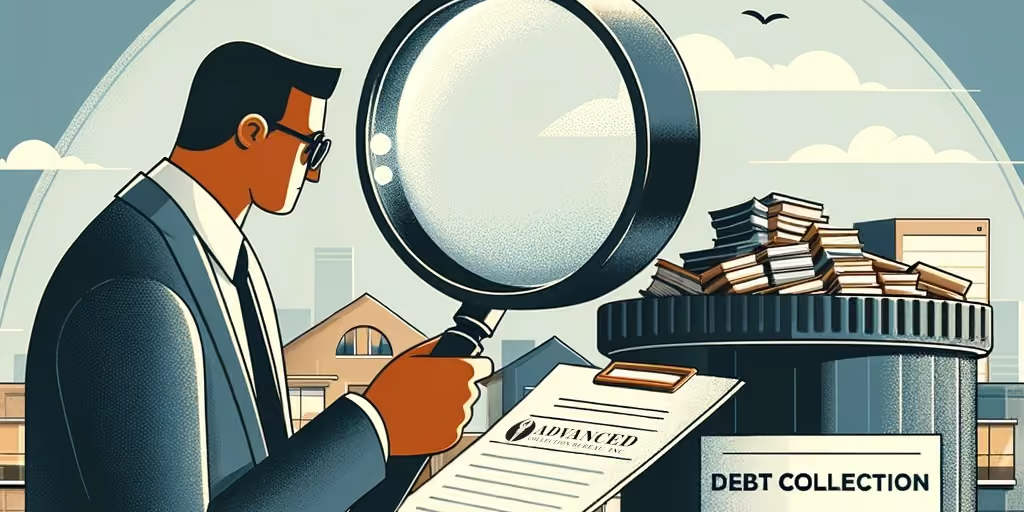
Debt collection is a complex and highly regulated area of the law, and apartment communities that engage in this process must navigate a minefield of federal, state, and local regulations. Failure to comply with these laws can result in costly fines, legal fees, and damage to your reputation. In this article, we'll provide an overview of the key legal considerations for apartment communities and share best practices for ensuring compliance and mitigating risk.
Understand the Fair Debt Collection Practices Act (FDCPA)
The FDCPA is the primary federal law governing debt collection practices. It sets forth strict guidelines for how collectors can communicate with consumers, including restrictions on call times, contact methods, and language used. Apartment communities must ensure that their in-house collection efforts and any third-party agencies they partner with fully comply with the FDCPA to avoid potential legal liabilities.
Stay current on state and local regulations
In addition to federal laws, many states and municipalities have their own regulations governing debt collection practices. These laws can vary widely and may impose additional requirements or restrictions on collectors. It's essential to stay informed about the specific regulations in your jurisdiction and ensure that your collection efforts are fully compliant.
Maintain accurate and transparent records
Proper documentation is critical in debt collection. Apartment communities must maintain accurate records of all past-due accounts, including lease agreements, move-out statements, and payment histories. This information should be easily accessible and securely stored to ensure compliance with legal requirements and to support collection efforts if necessary.
Provide clear and timely communication to debtors
When pursuing past-due accounts, it's crucial to provide clear, accurate, and timely information to debtors about their rights and obligations. This includes sending written notices of the debt, informing them of their right to dispute the debt, and providing clear instructions for making payments. By prioritizing transparency and proactive communication, apartment communities can reduce the risk of legal disputes and improve the chances of successful recovery.
Partner with a compliant and reputable collection agency
Outsourcing debt collection to a specialized agency can help apartment communities navigate the legal landscape more effectively. However, it's essential to choose a partner that is fully compliant with all relevant laws and regulations and has a proven track record of success. At Advanced Collection Bureau, we pride ourselves on our commitment to compliance, professionalism, and integrity. Our team of certified collectors stays up-to-date on the latest legal requirements to ensure that our clients are protected from potential liabilities.
By staying informed about the legal landscape of debt collection and implementing best practices for compliance, apartment communities can minimize their risk and improve their chances of successful recovery. If you'd like to learn more about how Advanced Collection Bureau can help you navigate this complex area of the law, please don't hesitate to reach out. Our team of experts is here to provide guidance and support to ensure that your debt collection efforts are effective, compliant, and legally sound.
The content, information, and templates provided by Advanced Collection Bureau, Inc. — including but not limited to articles, rental applications, lease agreements, and notice forms — are intended for general informational and educational purposes.
They are not legal advice and should not be relied upon as such. The information is general in nature and may not reflect the most current legal developments or account for the specific requirements of your state, city, or municipality.
Use of this content or any associated templates does not create an attorney-client relationship between you and Advanced Collection Bureau, Inc. We make no warranties or representations as to the accuracy, completeness, suitability, or legal enforceability of any content or document provided. Advanced Collection Bureau, Inc. is not a law firm or an attorney.
By accessing, downloading, or using any material from this website, you acknowledge and agree that you are solely responsible for ensuring compliance with all applicable U.S. federal, state, and local laws, and that you will seek guidance from a qualified legal professional as needed.
Advanced Collection Bureau, Inc., its affiliates, and contributors expressly disclaim any and all liability for any loss, damage, or claim arising out of or in connection with the use or misuse of the content, advice, and templates provided.