When you receive a collection notice or phone call from an unfamiliar company, it's natural to have questions about who they are and why they're contacting you. Penn Credit Corporation is one of the nation's established debt collection agencies, and if they've reached out to you, understanding their business, practices, and your rights will help you respond appropriately. This comprehensive guide provides everything you need to know about Penn Credit Corporation and how to handle interactions with them.
What Is Penn Credit Corporation?
Penn Credit Corporation is a nationwide accounts receivable management firm that has specialized in debt collection since 1987. For nearly four decades, the company has worked with creditors across multiple industries to recover outstanding debts owed by consumers and businesses throughout the United States.
As a third-party debt collection agency, Penn Credit typically does not purchase debts but instead works on behalf of original creditors to recover unpaid balances. Under this arrangement, creditors hire Penn Credit on a contingency basis, meaning the company earns a percentage of the debts they successfully collect. In some cases, Penn Credit may also purchase debt portfolios outright, though this represents a smaller portion of their business model.
The company operates from its headquarters in Harrisburg, Pennsylvania, and maintains additional office locations to support nationwide collection operations. Penn Credit employs between 51 and 200 people according to various sources, with annual revenues estimated between $25 million and $50 million.
Penn Credit built its reputation on what they describe as three core pillars: service, integrity, and results. The company emphasizes professional representation of their clients while maintaining compliance with applicable federal, state, and local laws governing debt collection activities.
Company Headquarters and Contact Information
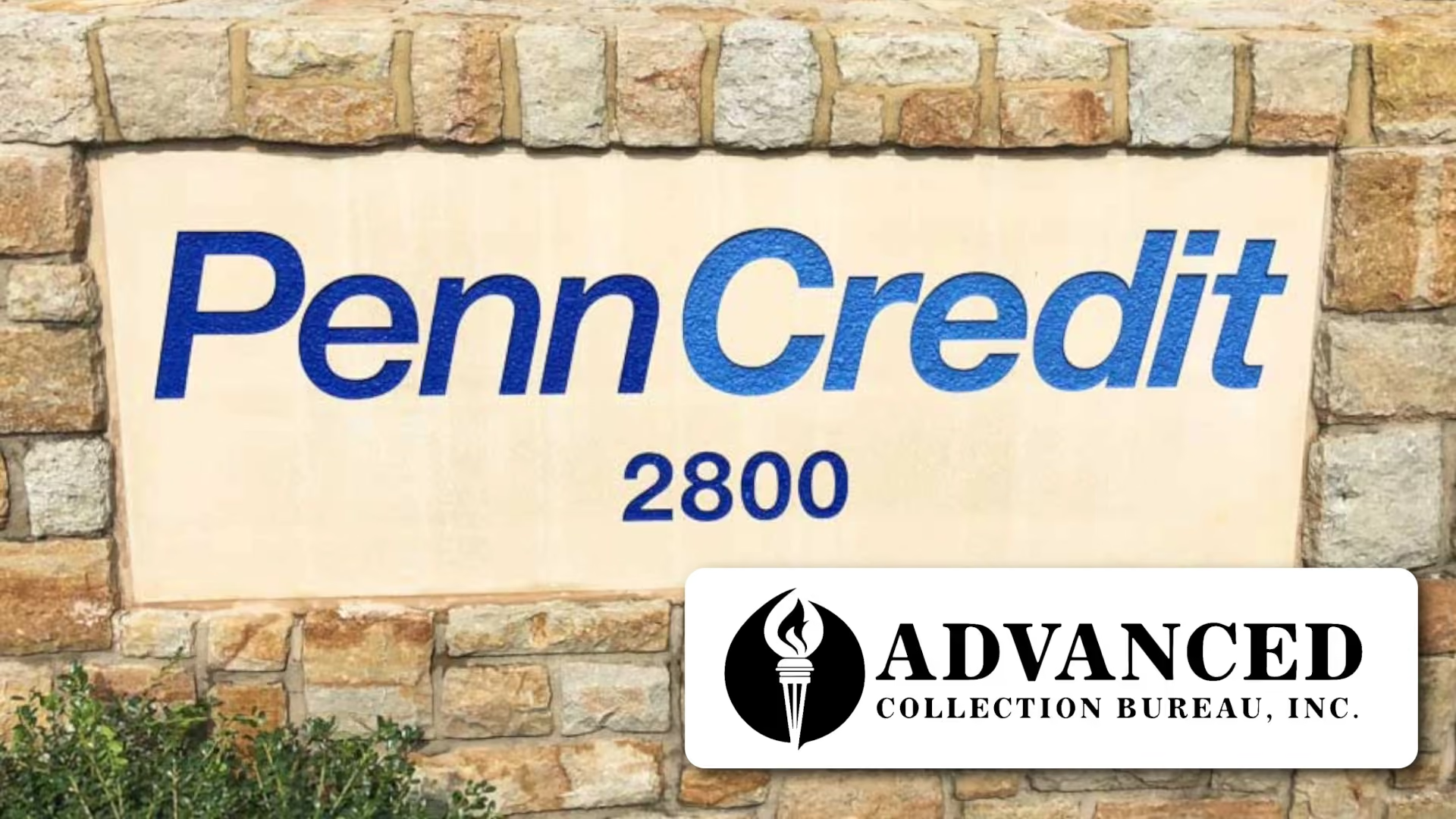
Penn Credit Corporation maintains multiple office locations to support their nationwide collection operations, with their primary headquarters based in Pennsylvania's capital city.
Main Headquarters:2800 Commerce DriveHarrisburg, PA 17110
PO Box Address:PO Box 69703Harrisburg, PA 17106-9703
Additional Locations:4636 East University Drive, Suite 200Phoenix, AZ 85034
100 Scenery Park DriveState College, PA 16801
7200 South Alton Way, Suite B-180Centennial, CO 80112
Phone Numbers:Collections Department: (800) 900-1380 or (800) 900-1381Sales Department: (800) 800-3328Main Office: (717) 238-7124
Fax: (717) 238-5693
Email Addresses:Collections/Compliance: compliance@penncredit.comGeneral Inquiries: inquiries@penncredit.comSales: sales@penncredit.com
Website: www.penncredit.com
Office Hours:Monday through Thursday: 8:00 AM to 10:00 PM ESTFriday: 8:00 AM to 5:00 PM ESTSaturday: 8:00 AM to 12:00 PM EST (some locations 8:00 AM to 2:00 PM EST)Sunday: Closed
Penn Credit offers multilingual services and can communicate orally in over 230 different languages through Certified Languages International. For Spanish speakers, they provide translated materials and Spanish-speaking representatives.
Leadership and Company Structure
Penn Credit Corporation operates as a privately held, family-owned business with long-standing leadership that has guided the company through decades of industry changes.
Tom Foley serves as CEO and owner, providing strategic direction for the organization. Richard S. Templin holds the position of President, overseeing day-to-day operations and company performance. Thomas Perrotta serves as Vice President of Compliance, a critical role given the extensive regulatory requirements governing debt collection activities.
The company maintains several specialized divisions and department heads including a Vice President of Customer Service, Vice President of Information Technology, SVP of ETC and Parking Solutions, and various division managers who oversee specific market segments or operational functions.
Donald Donagher has been identified as CEO in some sources, though this may reflect historical leadership or specific corporate entities within the Penn Credit family of companies. The private ownership structure allows Penn Credit to maintain consistent operational approaches focused on long-term client relationships rather than short-term quarterly earnings pressures.
Penn Credit maintains active membership in ACA International, the Association of Credit and Collection Professionals, demonstrating commitment to industry best practices and professional standards. The company also holds accreditation with the Better Business Bureau and participates in various industry associations including the Healthcare Financial Management Association.
Industries and Markets Served
Penn Credit has developed specialized expertise across multiple industry verticals, allowing them to tailor collection approaches to the unique characteristics and regulatory requirements of each market sector.
Government Collections
Penn Credit works extensively with federal, state, and local government agencies to recover unpaid taxes, traffic citations, court fines, parking tickets, municipal utility bills, and various government fees. Government debt collection requires particular attention to due process requirements, public records laws, and intergovernmental cooperation protocols. The company's experience working with public agencies means they understand the balance between aggressive collection and maintaining positive public relations for government entities.
Healthcare Collections
Medical debt represents a significant focus area for Penn Credit. The company recovers unpaid patient balances from hospitals, physician practices, imaging centers, laboratories, and other healthcare providers. Healthcare collections present unique challenges due to insurance billing complexities, patient financial hardship, and the sensitive nature of medical services. Similar to how other medical debt collection agencies operate, Penn Credit must navigate HIPAA requirements and maintain patient dignity while pursuing legitimate debts.
Through their Penn Billing division, the company offers Extended Business Office services that go beyond traditional collections. These EBO services include insurance follow-up, payment plan monitoring, system conversion support, and revenue cycle consulting that helps healthcare providers optimize their entire billing operation.
Higher Education Collections
Penn Credit collects unpaid student loans, tuition balances, fees, and other education-related receivables for colleges, universities, and private education lenders. Education debt collection involves working with young adults, understanding federal student loan regulations, and coordinating with financial aid offices and registrar systems.
Tolling Operations
The company has developed specialized expertise in toll road collections, recovering unpaid Pay-By-Plate invoices, toll violations, and negative balance accounts for toll authorities across the country. Penn Credit's DMVInfoNow service enables toll agencies to retrieve vehicle registered owner information from DMVs nationwide for out-of-state plates, facilitating enforcement actions against out-of-state violators.
Utilities and Telecommunications
Penn Credit recovers unpaid bills for gas, electric, water, sewer, trash and recycling, cable and internet, landline and cellular services, and other utility providers. Utility debt collection often involves final bills from customers who moved, disconnected accounts with outstanding balances, and delinquent ongoing services requiring delicate handling to avoid service interruptions while pursuing payment.
Commercial Accounts
Beyond consumer debt, Penn Credit handles business-to-business collections for commercial receivables. Commercial debt collection operates under different legal requirements than consumer debt in many respects, allowing for more flexible collection approaches while requiring understanding of business contract law and commercial dispute resolution.
Services and Collection Methods
Penn Credit offers a comprehensive suite of accounts receivable management services designed to maximize recovery while maintaining professional standards and regulatory compliance.
Third-Party Collection Services
Traditional contingency-based collection represents Penn Credit's core service. Under this model, creditors place delinquent accounts with Penn Credit, and the company pursues recovery through phone calls, letters, email, and text message communication when legally permissible. Penn Credit earns a percentage of amounts collected, typically around 18% according to some sources, though rates vary based on account age, balance, and complexity.
Small Balance Recovery
Penn Credit specializes in efficient recovery of small balance accounts that many agencies consider unprofitable to pursue. Through economies of scale, technology-driven communication, and streamlined processes, the company can cost-effectively collect smaller debts that might otherwise be written off entirely.
Legal Collections
For accounts requiring court action, Penn Credit coordinates with attorney networks to file lawsuits, obtain judgments, and pursue post-judgment collection activities including wage garnishment and bank account levies where permitted by state law. The legal collections division evaluates accounts for suit worthiness and manages the litigation process from filing through judgment enforcement.
Extended Business Office Services
Through the Penn Billing division, Penn Credit provides comprehensive revenue cycle management services that extend beyond traditional debt collection. EBO services include early-stage account resolution, insurance claim follow-up, payment plan administration, and customer service functions that help clients optimize cash flow before accounts become delinquent.
Skip Tracing and Location Services
Penn Credit employs advanced skip tracing tools and databases to locate consumers who have moved, changed contact information, or otherwise become difficult to reach. Their location services utilize public records, credit header information, utility connections, and other data sources to update contact information and maximize the likelihood of successful contact.
Compliance and Quality Assurance
Penn Credit maintains comprehensive compliance programs designed to ensure adherence to the Fair Debt Collection Practices Act and other applicable regulations. Quality assurance programs include call monitoring, representative training, and regular audits to identify and correct potential compliance issues before they result in consumer complaints or regulatory action.
Consumer Complaints and Company Reputation
Like most collection agencies, Penn Credit has received significant consumer complaints, though their responses and BBB accreditation suggest an effort to address issues professionally.
The Better Business Bureau shows Penn Credit Corporation as BBB accredited with an A+ rating. However, the customer review rating tells a different story, with just 1.4 out of 5 stars based on consumer feedback. The BBB has received 223 complaints against Penn Credit over the past three years.
The Consumer Financial Protection Bureau database shows 387 complaints filed against Penn Credit in the most recent year. Common complaint themes include allegations of attempting to collect debts already paid, pursuing incorrect amounts, insufficient debt verification when requested, calling wrong numbers or contacting the wrong person, continuing contact after cease communication requests, and inaccurate credit reporting.
Many complaints allege that Penn Credit contacted consumers at work despite being told not to do so, reported debts to credit bureaus without proper validation, and failed to provide adequate documentation when requested. Some consumers report that Penn Credit's representatives were rude or unprofessional during collection calls.
It's important to note that collection agencies often receive disproportionately negative reviews because consumers who successfully resolve legitimate debts rarely leave positive feedback, while those disputing debts are highly motivated to file complaints. However, the volume and consistency of certain complaint patterns suggests areas where Penn Credit could improve communication, verification procedures, and compliance with consumer protection laws.
Penn Credit consistently responds to BBB complaints, typically confirming they mailed validation notices to consumers' addresses on file and followed required timelines before credit reporting. The company's responses demonstrate engagement with the complaint resolution process, though consumers don't always accept the responses as satisfactory.
Your Rights When Penn Credit Contacts You
Understanding your legal protections is essential when dealing with any debt collector, including Penn Credit. Federal and state laws provide specific rights designed to protect consumers from abusive, deceptive, or unfair collection practices.
The Fair Debt Collection Practices Act requires Penn Credit to provide you with a validation notice within five days of their initial contact. This notice must include the amount of debt claimed, the name of the original creditor, a statement that you have 30 days to dispute the debt, and information about how to request verification.
You have the right to request debt validation at any time. If you send a written request within 30 days of receiving the initial validation notice, Penn Credit must cease collection activities until they provide proper verification. Debt validation should include documentation proving you owe the debt, the correct amount owed, that the debt has not been paid, and that Penn Credit has legal authority to collect it.
Penn Credit cannot call you before 8:00 AM or after 9:00 PM in your time zone unless you agree otherwise. They cannot contact you at work if you tell them your employer prohibits such calls. The company cannot use threatening language, profane words, or make repeated calls intended to harass you.
If you send Penn Credit a written cease communication letter, they must stop all contact except to inform you that communication is ending or to notify you of specific actions like filing a lawsuit. However, sending such a letter does not eliminate the debt, and Penn Credit retains the right to pursue other collection methods including litigation.
Penn Credit cannot threaten legal action they don't intend to take, cannot misrepresent the amount you owe, and cannot falsely claim to be attorneys or government officials. They also cannot discuss your debt with third parties like family members, neighbors, or coworkers except to obtain location information, and even then they cannot disclose that the contact relates to debt collection.
State laws may provide additional protections beyond the FDCPA. For example, some states limit the interest rates collectors can charge, restrict the methods available for wage garnishment, or provide additional disclosure requirements. Penn Credit maintains licenses in all states where they operate and must comply with state-specific regulations in addition to federal law.
How to Respond When Penn Credit Contacts You
Taking the right approach when Penn Credit reaches out can protect your rights and potentially save you money. Here is a strategic framework for handling their contact.
First, do not admit to owing the debt or make any payments during the initial conversation. Collection representatives are trained to secure payment commitments quickly, often before consumers have time to verify the debt's legitimacy or understand their options.
Request written validation of the debt. Ask Penn Credit to send documentation proving you owe the debt, including the original creditor's name, account number, amount owed, and proof that Penn Credit has authority to collect. Send this request in writing via certified mail within 30 days of their first contact for maximum legal protection under the FDCPA.
Pull your credit reports from all three major credit bureaus through AnnualCreditReport.com to verify if the debt appears on your reports and whether the information matches what Penn Credit claims. Sometimes collectors have incomplete or inaccurate information leading them to pursue the wrong person or incorrect amounts.
Check the statute of limitations for debt collection in your state. Each state sets time limits for how long creditors can successfully sue to collect debts. If your debt exceeds the statute of limitations, Penn Credit can still attempt to collect but cannot successfully sue you if you raise the statute of limitations as a defense. However, be cautious because making a payment or acknowledging the debt in writing can restart the clock in some states.
Consider whether you actually owe the debt. Common reasons people don't owe debts collectors claim include identity theft, debts already paid to the original creditor, debts discharged in bankruptcy, incorrect amount calculations due to improper interest or fees, and debts belonging to someone else with a similar name.
If you determine the debt is legitimate and you want to resolve it, negotiate before paying. Collection agencies, particularly when working on contingency for original creditors, often have authority to settle for less than the full balance. Get any settlement agreement in writing before making payment, and never provide bank account information over the phone or authorize electronic withdrawals.
Document all interactions with Penn Credit meticulously. Keep detailed records of phone calls including dates, times, representative names, and conversation summaries. Save all letters, emails, and text messages. This documentation becomes crucial evidence if you need to file complaints with regulatory agencies or defend yourself if Penn Credit files a lawsuit.
Penn Credit's Credit Reporting Practices
Penn Credit reports delinquent accounts to credit bureaus, which can significantly impact your credit score and future ability to obtain financing. Understanding their reporting practices helps you protect your credit profile.
According to their disclosures, Penn Credit supplies payment information to credit rating agencies for residential accounts as authorized by law. If your account is more than 120 days delinquent, the credit reporting could harm your credit rating. However, Penn Credit does not report balances under $100, though accounts previously reported may remain with credit bureaus even if the balance subsequently drops below $100.
If you believe Penn Credit has reported inaccurate information to credit bureaus, you have the right to dispute the information directly with the credit bureaus and with Penn Credit. The credit bureaus must investigate disputes and remove information that cannot be verified. Penn Credit must respond to disputes from credit bureaus by providing verification or requesting removal of the tradeline.
Some consumers attempt to negotiate pay-for-delete agreements where Penn Credit agrees to remove the tradeline from credit reports in exchange for payment. While such arrangements are not prohibited by law, not all collectors agree to them, and there's no guarantee Penn Credit will accept such proposals. Any pay-for-delete agreement must be obtained in writing before payment.
Licensing and Regulatory Compliance
Penn Credit maintains necessary licenses to operate as a debt collection agency across the United States. Each state has different licensing requirements, and maintaining licenses in all 50 states requires significant administrative resources and compliance infrastructure.
The company holds specific licenses including California License Number 10269-99. They maintain an in-state office in Colorado at 7200 South Alton Way, Suite B-180, Centennial, CO 80112, as required by Colorado law. Penn Credit is also licensed by the Minnesota Department of Commerce and other state regulators.
Penn Credit must comply with federal regulations including the FDCPA enforced by the Consumer Financial Protection Bureau and state-specific collection laws that vary significantly. For example, some states require specific language in collection letters, limit the hours collectors can call beyond federal restrictions, or provide additional validation rights to consumers.
The company's membership in ACA International and BBB accreditation demonstrate commitment to industry standards, though these memberships don't guarantee compliance or prevent violations. Consumers who believe Penn Credit has violated collection laws can file complaints with the CFPB, their state Attorney General's office, or consult with consumer rights attorneys about potential legal action.
Alternatives to Dealing with Penn Credit
If you're facing debt collection from Penn Credit, you have several options beyond simply paying the full amount or ignoring their contact.
Debt settlement involves negotiating to pay less than the full amount owed in exchange for Penn Credit closing the account and reporting it as satisfied or paid. This works best when you can offer a lump sum payment, as collectors prefer immediate resolution over extended payment plans. Get any settlement in writing before payment.
Payment plans allow you to pay the debt over time in monthly installments. While you may not get a reduction in the total amount owed, structured payments can make large debts more manageable. Be realistic about what you can afford, as missing payments on an arrangement can restart intensive collection activity.
Debt validation disputes challenge the debt's legitimacy or accuracy. If Penn Credit cannot provide proper verification, they must cease collection efforts and cannot report the debt to credit bureaus. However, if they do provide validation, you'll need to decide on next steps.
Credit counseling services can help you develop a debt management plan that consolidates multiple debts into a single monthly payment. Non-profit credit counseling agencies often negotiate reduced interest rates and fee waivers with creditors, though Penn Credit may or may not participate in such programs depending on their client's policies.
Bankruptcy provides legal protection from collection actions and can discharge eligible debts entirely. While bankruptcy has significant long-term consequences for your credit, it offers a fresh start for those overwhelmed by multiple debts. Chapter 7 bankruptcy can eliminate most unsecured debts, while Chapter 13 allows you to reorganize debts into a court-approved repayment plan.
Working with a consumer rights attorney experienced in FDCPA violations and debt collection may be appropriate if Penn Credit has engaged in illegal collection practices. Attorneys who specialize in consumer protection law often work on contingency, meaning you pay nothing unless they recover damages on your behalf.
Industry Recognition and Awards
Penn Credit has received recognition for their performance from clients and industry organizations. In 2018, the company received ACA International's All In Award, which recognizes outstanding industry performance and customer satisfaction. This award acknowledges Penn Credit's commitment to professional collection practices and client service.
Various creditor clients have provided recognition over the years for Penn Credit's performance, though specific client testimonials and awards are not extensively publicized. The company's longevity in the industry since 1987 suggests they have maintained satisfactory performance for their client base over nearly four decades.
Penn Credit's accreditation with the Better Business Bureau and A+ rating demonstrate engagement with third-party accountability systems, though these ratings primarily measure responsiveness to complaints rather than the absence of complaints or superior business practices.
Technology and Payment Options
Penn Credit invests in technology infrastructure to support efficient collection operations and provide convenient payment options for consumers.
The company offers an online payment portal accessible through their website where consumers can make one-time payments or set up payment arrangements. The portal accepts credit cards, debit cards, and electronic checks, though convenience fees may apply for certain payment methods.
Penn Credit utilizes predictive dialing systems for outbound calling operations, skip tracing databases for locating consumers, and compliance monitoring systems to track and prevent FDCPA violations. Their client portal allows creditors to submit accounts, monitor collection progress, and access reporting tools for analyzing portfolio performance.
For consumers who prefer not to interact directly with collectors, the online payment portal provides a self-service option to resolve debts without phone conversations. However, consumers should still request written confirmation of any payment arrangements and settlement agreements before making payments.
Preventing Future Collection Issues
Beyond resolving current collection attempts from Penn Credit, taking proactive steps can help prevent future collection problems and protect your financial reputation.
Monitor your credit regularly through the free annual credit reports available from each bureau at AnnualCreditReport.com. Early detection of accounts going to collections gives you more time to address issues before they severely impact your credit score and lead to intensive collection activity.
Communicate with creditors before accounts charge off. If you're experiencing financial difficulty, many original creditors offer hardship programs, payment plans, or temporary relief before sending accounts to collection agencies. Once debts reach collectors like Penn Credit, your negotiation leverage decreases and your options narrow.
Keep detailed financial records including payment confirmations, account statements, billing correspondence, and creditor communication. Documentation helps you quickly dispute incorrect collection attempts and prove accounts were paid or settled when mistakes occur.
Understand your financial obligations before taking on new debt. Many collection accounts arise from consumers underestimating monthly payment requirements, not reading terms and conditions carefully, or failing to account for interest and fees that can cause balances to grow unexpectedly.
Build and maintain emergency savings when possible to handle unexpected expenses without relying entirely on credit. Even a small emergency fund can prevent minor financial setbacks from snowballing into collection accounts and credit damage.
Making Informed Decisions About Penn Credit
If Penn Credit Corporation has contacted you about a debt, you now have comprehensive information to make informed decisions about how to respond. The company is a legitimate, long-established debt collection agency with nearly 40 years of industry experience and proper licensing across the United States.
Your first priority should always be verifying the debt's legitimacy and accuracy before making any payment or acknowledging obligation. Too many consumers pay debts they don't actually owe, or pay more than required, because they fail to request proper validation or don't understand their rights under federal and state law.
Understanding your protections under the FDCPA and state collection laws gives you leverage in negotiations and protects you from illegal collection tactics. Collectors cannot threaten, harass, or deceive you, and violations of these rules can result in damages awards that sometimes exceed the original debt amount.
If the debt is legitimate and you have financial means to address it, negotiating a settlement or payment plan often proves more cost-effective than ignoring the situation until Penn Credit files a lawsuit. Judgments can lead to wage garnishment, bank account levies, and liens on property in many states, making voluntary resolution preferable to forced collection.
For consumers facing multiple collection accounts or overwhelming debt loads, professional assistance from credit counselors, debt settlement companies, or bankruptcy attorneys may provide more comprehensive solutions than attempting to negotiate with each collector individually.
Ultimately, dealing with debt collection situations requires balancing your legal rights against practical financial realities. Penn Credit will continue pursuing collection through legal channels if necessary, but consumers who understand the process and their rights typically achieve better outcomes than those who either ignore collectors or immediately agree to unfavorable terms without verification or negotiation.
Whether you're dealing with Penn Credit or any other collection agency, remember that knowledge, documentation, and strategic thinking are your best tools. Take the time to verify debts, understand your rights, and make informed decisions based on your specific financial situation rather than reacting out of fear or pressure.
The content, information, and templates provided by Advanced Collection Bureau, Inc. — including but not limited to articles, rental applications, lease agreements, and notice forms — are intended for general informational and educational purposes.
They are not legal advice and should not be relied upon as such. The information is general in nature and may not reflect the most current legal developments or account for the specific requirements of your state, city, or municipality.
Use of this content or any associated templates does not create an attorney-client relationship between you and Advanced Collection Bureau, Inc. We make no warranties or representations as to the accuracy, completeness, suitability, or legal enforceability of any content or document provided. Advanced Collection Bureau, Inc. is not a law firm or an attorney.
By accessing, downloading, or using any material from this website, you acknowledge and agree that you are solely responsible for ensuring compliance with all applicable U.S. federal, state, and local laws, and that you will seek guidance from a qualified legal professional as needed.
Advanced Collection Bureau, Inc., its affiliates, and contributors expressly disclaim any and all liability for any loss, damage, or claim arising out of or in connection with the use or misuse of the content, advice, and templates provided.