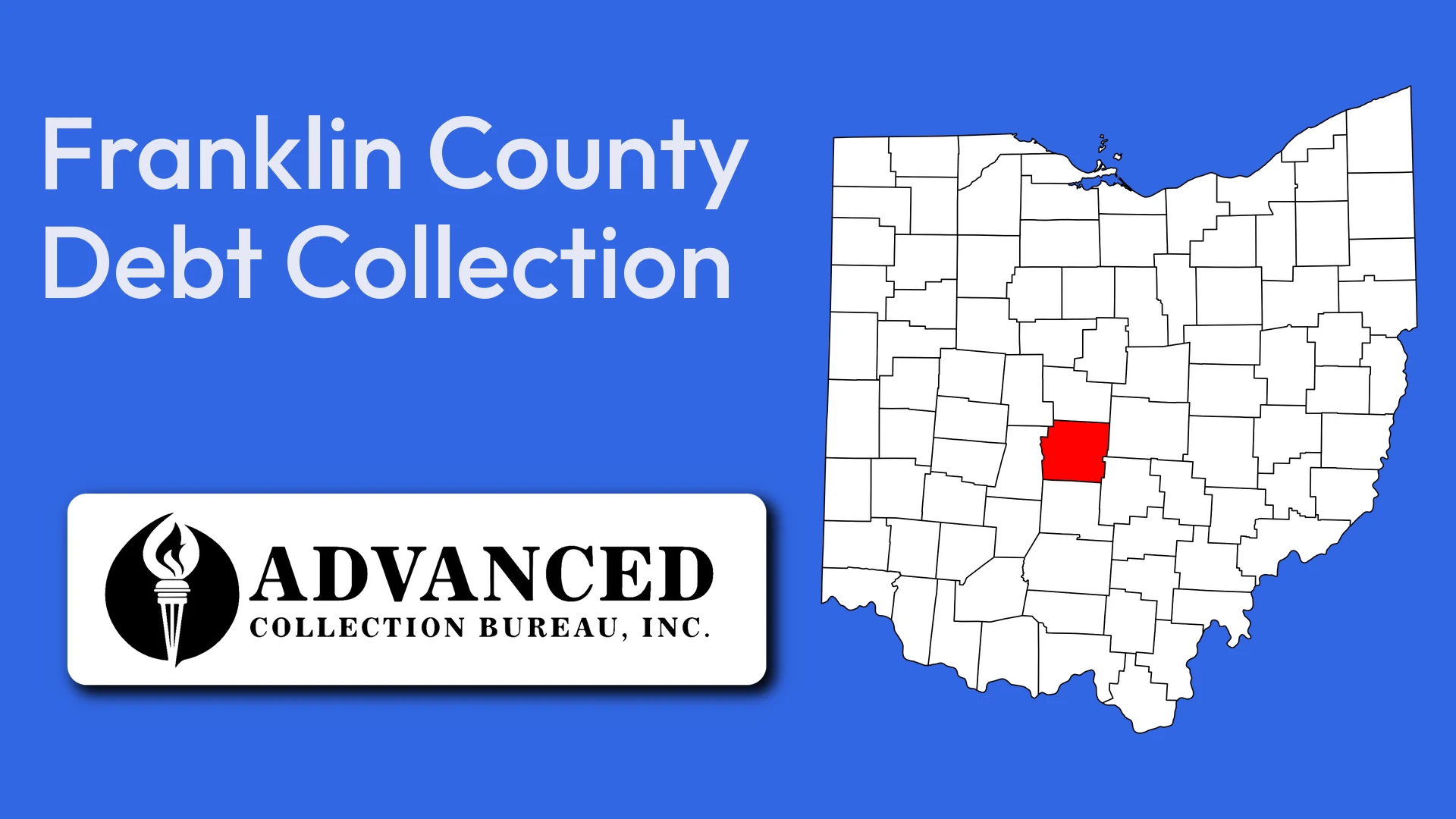
Between Ohio State move-out week and the constant churn of apartments along the I-270 Outer Belt, Franklin County landlords watch a lot of balances walk out the door. ACB helps local landlords and property managers recover unpaid rent and tenant debt.
From brick doubles in Clintonville to garden apartments ringing the I-270 Outer Belt, Franklin County runs one of the busiest rental markets in Ohio, and that volume brings a steady stream of balances left behind when tenants move out. Advanced Collection Bureau (ACB) helps landlords and property managers recover unpaid rent, lease-break balances, move-out damages that exceed the security deposit, unpaid utilities or fees owed under the lease, and money judgments won in eviction cases.
We work with independent landlords who own a handful of units, property management companies with large portfolios, apartment communities, student housing near campus, workforce housing, and manufactured home communities. ACB serves owners in Columbus, the county seat, as well as Grove City, Reynoldsburg, Hilliard, Gahanna, Whitehall, and Franklin Township. When a case in the Franklin County Municipal Court ends in a money judgment, the court's Eviction Court page explains how hearings and outcomes work, and ACB picks up where possession ends by collecting the balance that is still owed.
Franklin County's rental demand is driven by some of the largest employers in the state. The Ohio State University anchors the campus area and its student rental market, where leases turn over every summer and roommates scatter after graduation. OhioHealth, Nationwide Children's Hospital, and the Ohio State Wexner Medical Center draw nurses, residents, and support staff who often rent while they build careers. Downtown, state government offices and Nationwide's headquarters bring office workers, JPMorgan Chase runs one of its largest operations in Central Ohio, and the warehouses around Rickenbacker International Airport employ a large logistics workforce that moves between shifts and jobs.
High turnover means more move-outs, and more move-outs mean more balances that go unpaid. The Columbus Apartment Association supports companies that own, manage, and service multifamily housing across Central Ohio and is a solid source of industry education for local operators. When a balance does need collecting, ACB follows the federal Fair Debt Collection Practices Act (FDCPA) and Ohio law on every account. Think of it like a fall Saturday at Ohio Stadium: more than 100,000 fans pour in, but they leave through dozens of gates, and you need a plan to find each one after the crowd disperses.
Evictions in Ohio are called forcible entry and detainer actions, and they are heard in municipal or county courts under ORC Chapter 1923. In Franklin County, those cases go to the Franklin County Municipal Court at 375 South High Street in downtown Columbus. The clerk's Civil Department handles eviction filings along with other civil cases, and its online case search lets you look up a docket, confirm a judgment, and check party names before you place an account. Because eviction filings carry real legal requirements, talk to an attorney before you file.
The Franklin County Auditor's real estate search lets you look up property records by address, owner name, or parcel number, which helps confirm ownership, review sales history, and see whether a former tenant owns property in the county. The Auditor also maintains the county's residential rental registration system, where owners keep contact and management information on file for each rental property. If you accept vouchers, the Columbus Metropolitan Housing Authority publishes landlord requirements, inspection guidance, and payment information for its Housing Choice Voucher program.
Collections fits after the court process or the move-out. An eviction judgment returns possession of the unit, but any money judgment for rent or damages still has to be collected. Separately, under ORC 5321.16, a landlord must return the security deposit or give the tenant an itemized list of deductions within 30 days after the tenant leaves. Once that itemized statement is done and a balance remains, that balance, along with any judgment, is what ACB works to recover.
Yes. Many Franklin County tenants relocate to nearby counties or out of state after a lease ends. ACB uses skip tracing to help locate former tenants who have moved and pursues the balance in line with the FDCPA. A forwarding address helps, but it is not required to get started.
Send ACB a copy of the judgment entry along with the lease and the tenant ledger. We contact the debtor, work toward a payment arrangement, and report eligible accounts to the credit bureaus. If further court action is needed to enforce the judgment, we will let you know so you can discuss options with your attorney.
ACB works on contingency, so there is no fee unless we collect. That makes it practical to place both large balances and smaller move-out charges. Property management companies can send accounts in bulk across an entire portfolio and track the status of each one.
ACB brings more than 25 years of experience in residential and medical debt collection. We skip trace former tenants who leave no forwarding address, report eligible accounts to the credit bureaus twice a month without guaranteeing any particular screening or payment outcome, and work on contingency, so you pay nothing unless we collect. To place an account, send the signed lease, the tenant ledger, the move-out statement with the itemized deposit deductions, and any judgment from the court.
Consider a hypothetical example: a property manager overseeing a few hundred units on the west side of Columbus has a dozen former residents who left owing rent and damages, several with eviction judgments already entered. Instead of chasing each one between leasing tours and maintenance calls, the manager sends the files to ACB in a single batch. We work to locate the former tenants, open payment conversations, and report eligible debts, while the manager's team stays focused on filling vacancies.
Unpaid rent in Franklin County does not have to be written off. For background on the rules behind your leases, review Ohio's landlord-tenant law, then let ACB handle the follow-through. Like a COTA bus that keeps looping back through downtown, we give collection follow-up a consistent process. Contact ACB today and start recovering what your Franklin County tenants owe.
Unpaid debts should not slow down your business.
We specialize in professional and compliant debt recovery, helping you maximize recoveries while maintaining strong customer relationships.
Our risk-free, results-driven approach ensures you only pay when we collect.
We're proud to serve over a thousand property management companies, landlords, and real estate owners. From small independent operators to large multi-property firms, we provide reliable, effective debt recovery.
For a quarter century, we've specialized in recovering residential rental debt. Our time-tested, ethical approach leverages deep industry expertise to get results while preserving tenant relationships.
We have successfully recovered over 85 million dollars in delinquent rent, fees and damage charges for our clients. Our advanced skip tracing and persistent efforts maximize the funds returned to your business.



Advanced Collection Bureau specializes in managing residential collections with a focus on maintaining positive relationships between property managers and tenants. Our experienced team understands the unique challenges of residential collections and employs proven strategies to recover debts efficiently.
Our approach includes personalized communication with debtors, flexible payment plans, and a thorough understanding of the legal requirements specific to residential collections. By partnering with us, you can expect increased recovery rates and reduced delinquencies, ensuring your property management operations run smoothly.

No one chooses to get sick, but they still need your services. We take a compassionate approach to medical collections, and our system works. We believe that friendly debt collectors do exist, and we have them on our team. Advanced Collection Bureau recognizes the sensitive nature of medical debt and strives to provide respectful and empathetic service to patients while ensuring healthcare providers receive the payments they are owed.
Our medical collections process involves clear communication, patient education on their financial responsibilities, and offering manageable payment solutions. We are compliant with all relevant healthcare regulations and ensure that the dignity and privacy of patients are preserved throughout the collections process.

Contractors and service providers alike can rejoice - we'll ensure what needs to be paid gets paid. Advanced Collection Bureau is dedicated to supporting contractors and service providers in recovering outstanding payments for their hard work. Our team understands the unique challenges faced by contractors, including project-based billing and delayed payments, and employs effective strategies to address these issues.
We offer a seamless process that includes thorough account reviews, consistent communication with clients, and legal support if necessary. Our goal is to minimize the financial strain on your business and ensure that you receive timely payments for the services you provide, allowing you to focus on growing your business and delivering quality work.

We believe that every client and every account is unique. That's why we take a customized approach to debt recovery, tailoring our strategies to fit the specific needs of each situation.
"Our company has used Advanced Collection Bureau for well over 10 years. They are very well versed in the collection industry and are a pleasure to work with.
I highly recommend this company and its services to any company looking for assistance with collecting past due debts.
Our representative, Dianna, is personable and attentive to her clients. She is very much appreciated for her efforts to get our debts collected."

"This letter is in reference to Advanced Collection Bureaus performance. Wells Boys and Girls Property Management have been using ACB for all of our collection needs. ACB has proved to be an excellent choice for all of our collection needs.
We have seen a noticeable increase in profits and professionalism. If you have any concerns or questions regarding the performance of ACB please feel free to contact us."
.avif)
"Matt at Advanced Collection Bureau assisted me with settling my debt with a poorly managed apartment complex.
After speaking to him for a few minutes he was able to send me the bill that the apartment complex never did."

"What a pleasant phone call I had with Jim! He was friendly, shared with me new laws regarding medical bills and my credit, as well as taking my bill down.
I paid it off today and on 2/1, it will disappear from my credit report. Woot! Thank you Mr. Richards!"

"Sam was very friendly, had a great sense of humor and actually made the phone call very pleasant.
Forgot I was even paying a collection bill and felt like I was talking to a long time friend. Got to pay off the debt and got an email verification. Hope to never speak to you again Sam!"



Trust our team for your debt resolution.