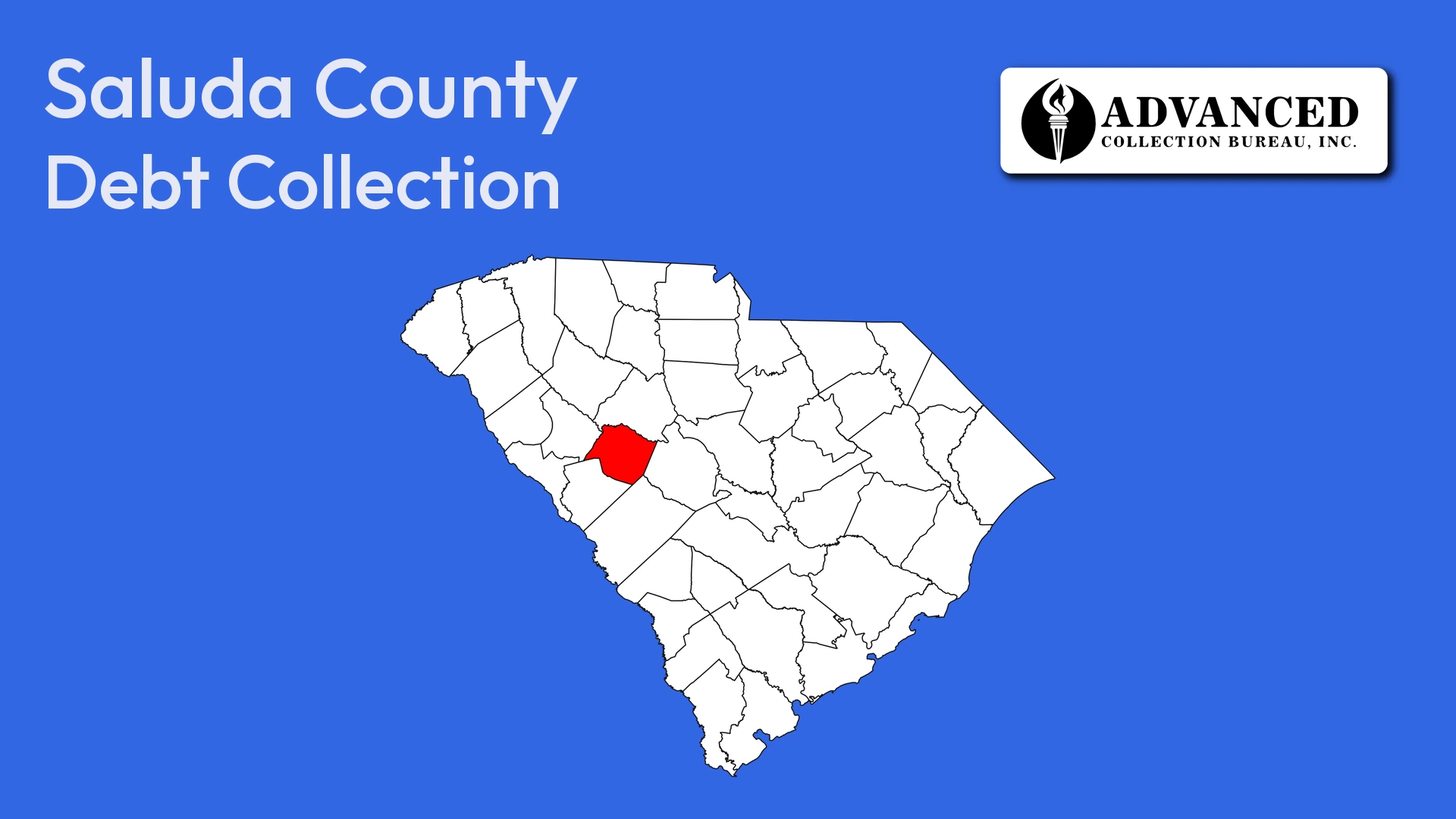
Agriculture, small towns, and the Lake Murray shoreline shape Saluda County's housing landscape. ACB helps landlords pursue unpaid rent and supported move-out balances.
Rental ownership in Saluda County spans Saluda, the county seat, Ridge Spring, Ward, and smaller communities such as Mount Willing. The Lake Murray shoreline is another important part of the county's residential setting. Advanced Collection Bureau helps landlords and property managers pursue documented unpaid residential rental accounts while they handle the demands of maintaining homes across this rural landscape.
The county's Saluda Forward planning document emphasizes the importance of agriculture and forestry and discusses residential activity around towns and the lake. An owner may be managing one house or a group of properties with different service arrangements. A consistent collection process gives former-resident balances a defined place in the business routine.
ACB can review unpaid rent, supported lease-break charges, damages beyond the security deposit, utility charges and fees established by the lease, and unpaid rental money judgments. An itemized ledger should show the charges, payments, credits, and amount remaining for review.
Agriculture and forestry contribute to Saluda County's economic identity, while town centers and lake communities create different residential settings. A manager may coordinate with contractors over a broad service area. Saving accurate inspection and billing records during turnover reduces the need for extra travel when a former-resident charge is questioned later.
Document the condition with dated photographs and specific notes. Match each repair charge to its invoice and keep the final utility bill with the provision explaining the resident's responsibility. If someone other than the owner conducted the inspection, include that person's report so the file remains understandable without a separate conversation about every detail.
ACB follows the FDCPA and applicable South Carolina law. The South Carolina Residential Landlord and Tenant Act provides a reference for ordinary residential tenancies. Like maintaining a useful record of work on a rural property, collection preparation benefits from dates, descriptions, and receipts that make the history easy to follow.
The Saluda County Assessor provides real property information and assessment resources. These can help an owner check the property identifiers used in a rental file. Consistent addresses and unit descriptions are particularly useful when bills, lease documents, and contractor records come from different sources.
The South Carolina magistrate court directory includes Saluda County court contacts. Magistrate courts handle eviction and ejectment matters. Recovering possession and collecting money that remains unpaid are separate matters. An attorney can advise on jurisdiction, case-specific filings, and enforcement choices.
Before submitting an account, assemble the signed lease, amendments, ledger, deposit accounting, condition records, invoices, and correspondence. Include any rental money judgment and subsequent payments. Reconcile the total against your accounting records and identify the person who can answer questions. This preparation gives ACB a clear starting point and can reduce the need to request documents after the account review begins.
Contact ACB about the individual account and the records available. Supply the signed lease, payment history, and final itemization. An owner does not need to build a large group of unpaid balances before discussing collection service.
Include the last reliable contact details and the communication history from the tenancy. ACB can review the documented account and discuss the information available. Skip tracing can help locate former residents as part of the collection process.
Show the deposit application in the final accounting and identify the balance left afterward. Keep the underlying invoices and rent entries with that accounting. A clear credit trail helps the reviewer understand the amount being pursued.
Advanced Collection Bureau is based in Florida and serves clients nationwide, with more than 25 years of experience. Skip tracing can help locate former residents, and eligible accounts receive twice-monthly credit reporting. The contingency fee arrangement means there is no collection fee unless ACB collects.
In a hypothetical Mount Willing rental, the owner has unpaid rent and a supported repair invoice remaining after the security deposit credit. The resident has moved, and the owner has retained the lease, inspection photographs, and dated messages about the account. ACB can review that packet and pursue the balance while the owner focuses on keeping the property in service.
Good records keep the work connected from one stage to the next. Contact ACB about Saluda County rental accounts and discuss how to submit your documentation for a professional review.
Unpaid debts should not slow down your business.
We specialize in professional and compliant debt recovery, helping you maximize recoveries while maintaining strong customer relationships.
Our risk-free, results-driven approach ensures you only pay when we collect.
We're proud to serve over a thousand property management companies, landlords, and real estate owners. From small independent operators to large multi-property firms, we provide reliable, effective debt recovery.
For a quarter century, we've specialized in recovering residential rental debt. Our time-tested, ethical approach leverages deep industry expertise to get results while preserving tenant relationships.
We have successfully recovered over 85 million dollars in delinquent rent, fees and damage charges for our clients. Our advanced skip tracing and persistent efforts maximize the funds returned to your business.

Advanced Collection Bureau specializes in managing residential collections with a focus on maintaining positive relationships between property managers and tenants. Our experienced team understands the unique challenges of residential collections and employs proven strategies to recover debts efficiently.
Our approach includes personalized communication with debtors, flexible payment plans, and a thorough understanding of the legal requirements specific to residential collections. By partnering with us, you can expect increased recovery rates and reduced delinquencies, ensuring your property management operations run smoothly.

No one chooses to get sick, but they still need your services. We take a compassionate approach to medical collections, and our system works. We believe that friendly debt collectors do exist, and we have them on our team. Advanced Collection Bureau recognizes the sensitive nature of medical debt and strives to provide respectful and empathetic service to patients while ensuring healthcare providers receive the payments they are owed.
Our medical collections process involves clear communication, patient education on their financial responsibilities, and offering manageable payment solutions. We are compliant with all relevant healthcare regulations and ensure that the dignity and privacy of patients are preserved throughout the collections process.

Contractors and service providers alike can rejoice - we'll ensure what needs to be paid gets paid. Advanced Collection Bureau is dedicated to supporting contractors and service providers in recovering outstanding payments for their hard work. Our team understands the unique challenges faced by contractors, including project-based billing and delayed payments, and employs effective strategies to address these issues.
We offer a seamless process that includes thorough account reviews, consistent communication with clients, and legal support if necessary. Our goal is to minimize the financial strain on your business and ensure that you receive timely payments for the services you provide, allowing you to focus on growing your business and delivering quality work.

We believe that every client and every account is unique. That's why we take a customized approach to debt recovery, tailoring our strategies to fit the specific needs of each situation.
"Our company has used Advanced Collection Bureau for well over 10 years. They are very well versed in the collection industry and are a pleasure to work with.
I highly recommend this company and its services to any company looking for assistance with collecting past due debts.
Our representative, Dianna, is personable and attentive to her clients. She is very much appreciated for her efforts to get our debts collected."

"This letter is in reference to Advanced Collection Bureaus performance. Wells Boys and Girls Property Management have been using ACB for all of our collection needs. ACB has proved to be an excellent choice for all of our collection needs.
We have seen a noticeable increase in profits and professionalism. If you have any concerns or questions regarding the performance of ACB please feel free to contact us."
.avif)
"Matt at Advanced Collection Bureau assisted me with settling my debt with a poorly managed apartment complex.
After speaking to him for a few minutes he was able to send me the bill that the apartment complex never did."

"What a pleasant phone call I had with Jim! He was friendly, shared with me new laws regarding medical bills and my credit, as well as taking my bill down.
I paid it off today and on 2/1, it will disappear from my credit report. Woot! Thank you Mr. Richards!"

"Sam was very friendly, had a great sense of humor and actually made the phone call very pleasant.
Forgot I was even paying a collection bill and felt like I was talking to a long time friend. Got to pay off the debt and got an email verification. Hope to never speak to you again Sam!"



Trust our team for your debt resolution.